
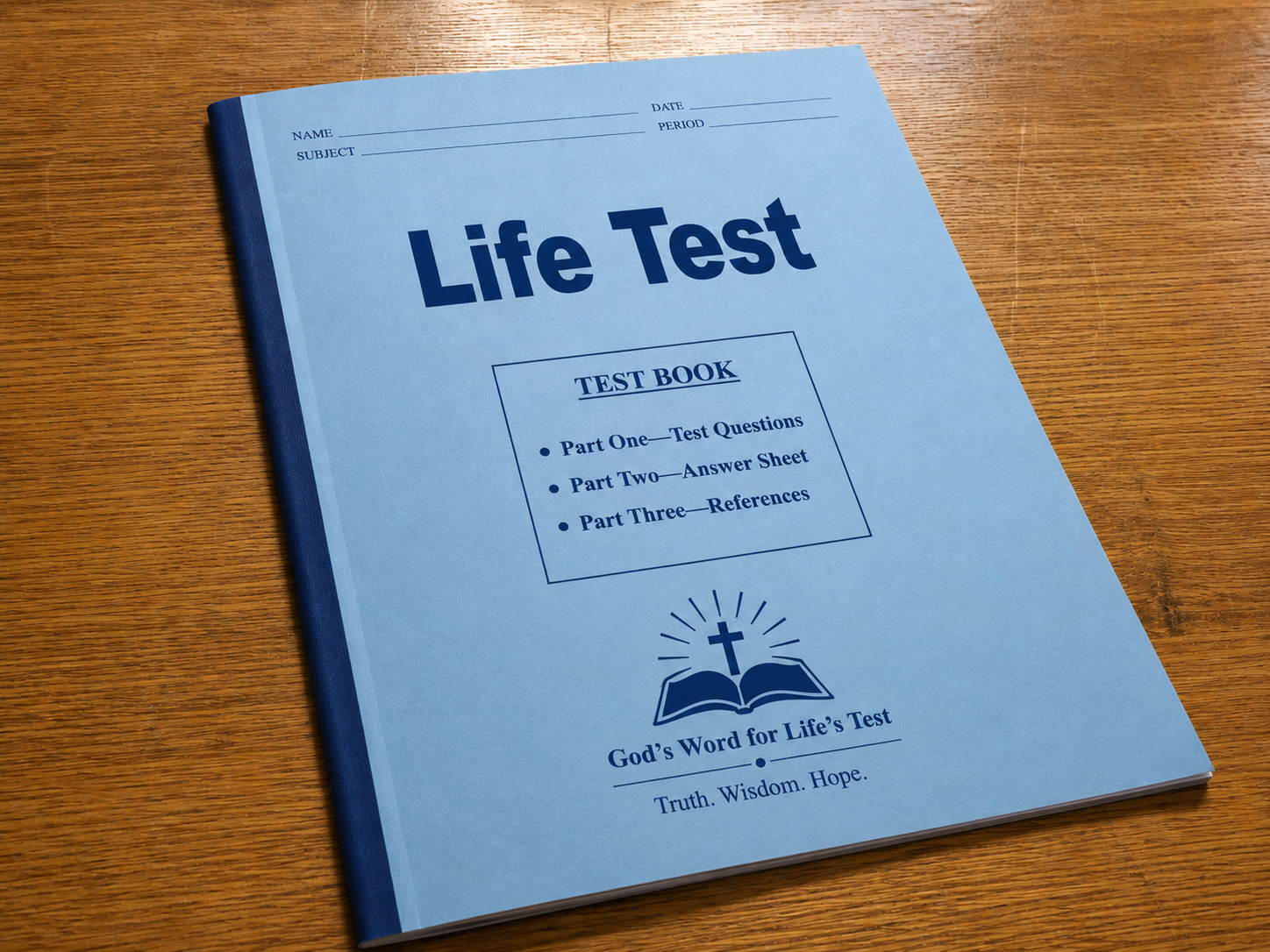
The Bible — The Best Resource for the Open-Book Test of Life
Life often feels like an open-book test: the questions are difficult, time is limited, emotions cloud judgment, and the consequences are real. The Bible presents itself not merely as literature or philosophy, but as the living Word of God given to guide humanity through a broken world. Here are five reasons it stands as the best resource for life’s hardest examinations.
1. The Bible Explains Reality Honestly
Many systems of thought promise happiness while minimizing suffering. The Bible does neither. From Genesis onward, it acknowledges humanity’s fallenness, grief, conflict, injustice, temptation, loneliness, and death. It describes the world as it truly is—not as we wish it to be.
Because Scripture tells the truth about pain, it also speaks credibly into pain. The cries of Job, David, Jeremiah, and Paul show that faith is not denied by pain but may be transformed by it. The Bible gives language to disappointment while still directing people toward hope in God.
The Bible teaches that suffering is not meaningless chaos but part of a larger spiritual reality in which God continues to work redemption, growth, and eternal purpose.
Footnotes
1. 1. “In this world you will have tribulation. But take heart; I have overcome the world.” — John 16:33
2. 2. “We are afflicted in every way, but not crushed; perplexed, but not driven to despair; persecuted, but not forsaken; struck down, but not destroyed;— 2 Corinthians 4:8–9
3. 3. “The Lord is near to the brokenhearted and saves the crushed in spirit.” — Psalm 34:18
2. The Bible Provides Wisdom Beyond Human Instinct
In moments of pressure, human instinct often leads toward fear, pride, revenge, despair, or self-protection. Scripture repeatedly calls people to a higher wisdom: forgiveness instead of bitterness, humility instead of arrogance, perseverance instead of surrender, and faith instead of panic.
The practical wisdom found in books like Proverbs and the teachings of Jesus Christ address relationships, money, speech, integrity, leadership, suffering, and decision-making. Over centuries, people from every culture and condition have found that biblical principles consistently lead toward human flourishing and moral clarity.
When life’s test questions become emotionally overwhelming, Scripture provides stable truth rather than shifting opinion.
Footnotes
4. “Trust in the Lord with all your heart, and do not lean on your own understanding.” — Proverbs 3:5–6
5. “If any of you lacks wisdom, let him ask God, who gives generously to all without reproach.” — James 1:5
6. “Your word is a lamp to my feet and a light to my path.” — Psalm 119:105
3. The Bible Reveals God’s Character in Human Struggle
The Bible does not merely give rules; it reveals God Himself. Throughout Scripture, God is shown as just, holy, patient, merciful, faithful, and loving even when humanity fails repeatedly.
This matters profoundly in a painful world. People can endure hardship more deeply when they trust the character of the One guiding them through it. The Bible portrays God not as distant from suffering but entering into it through Jesus Christ—who experienced rejection, betrayal, injustice, physical pain, and death.
Christian faith therefore does not claim that God ignores suffering; it claims God entered suffering to redeem it. That gives believers not only instruction for life’s tests, but companionship within them.
Footnotes
7. “The Word became flesh and dwelt among us.” — John 1:14
8. “For we do not have a high priest who is unable to sympathize with our weaknesses.” — Hebrews 4:15
9. “Cast all your anxieties on Him, because He cares for you.” — 1 Peter 5:7
4. The Bible Transforms the Inner Person
Information alone cannot solve humanity’s deepest problems. People often know the right thing yet lack the power to live it consistently. The Bible claims to do more than inform the mind—it seeks to transform the heart.
Scripture exposes destructive motives, convicts conscience, renews thinking, and calls people into repentance, faith, and spiritual maturity. Countless lives damaged by addiction, hatred, fear, greed, or despair have been redirected through engagement with God’s Word.
In the “open-book test” of life, success is not merely about external achievement. It involves becoming the kind of person who can endure trials with courage, love others sacrificially, and maintain integrity under pressure. The Bible uniquely aims at that inner transformation.
Footnotes
10. “Do not be conformed to this world, but be transformed by the renewal of your mind.” — Romans 12:2
11. “For the word of God is living and active, sharper than any two-edged sword.” — Hebrews 4:12
12. “If anyone is in Christ, he is a new creation.” — 2 Corinthians 5:17
5. The Bible Gives Hope That Extends Beyond This Life
Most worldviews struggle to provide lasting hope in the face of death, injustice, and irreversible loss. The Bible confronts these realities directly while pointing beyond them.
Its central message is not simply moral improvement but redemption: that God is reconciling humanity to Himself and ultimately restoring creation. The resurrection of Jesus Christ stands at the center of this hope.
Because of this, believers can face suffering without concluding that suffering has the final word. The Bible teaches that pain is temporary, evil is accountable, and eternal life with God is possible. That hope gives strength for endurance when earthly answers are incomplete.
Footnotes
13. “I am the resurrection and the life. Whoever believes in me, though he die, yet shall he live.” — John 11:25
14. “He will wipe away every tear from their eyes, and death shall be no more.” — Revelation 21:4
15. “These light momentary afflictions are preparing for us an eternal weight of glory beyond all comparison.” — 2 Corinthians 4:17
Conclusion
An open-book test is only helpful if the book contains reliable answers. The Bible has endured through centuries because it addresses the deepest human questions with realism, wisdom, truth, and hope. It speaks to both the brokenness of the world and the faithfulness of God.
In times of confusion, grief, temptation, uncertainty, and challenge, the Bible remains not merely a religious text, but a living guide for navigating life with truth, courage, and eternal perspective.
The Bible is the living Word of God, producing supernatural change within the person tested by life. May it transform you.