
Prayer—Life's First Responder
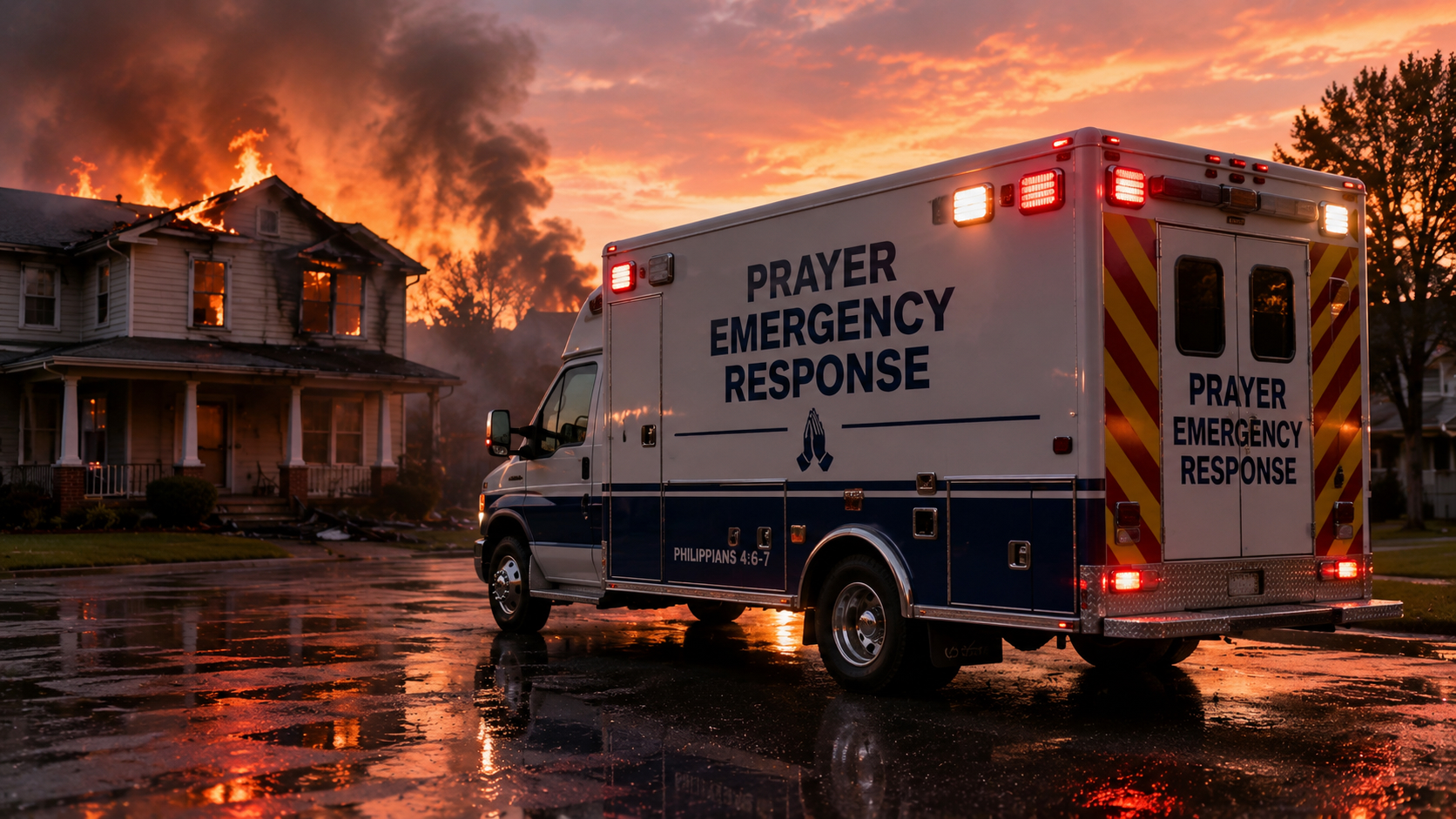
When an immediate response to life’s dangers and critical situations is imperative—necessary for physical and emotional survival—our old habits, instincts, and conditioning may drive us to solve our own problems or call upon existing resources. While certain actions are both necessary and appropriate—we pull the fire alarm at the first sign of smoke, seek medical care when injured, or call for help in moments of danger—there is also a complementary and vital role for prayer.
Too often, prayer becomes our last resort rather than our first response. Yet throughout Scripture, God repeatedly invites His people to call upon Him first in times of fear, confusion, weakness, temptation, and suffering. Prayer is not passive resignation nor avoidance of responsibility. Rather, it is the immediate turning of the heart and mind toward the One who sees fully, knows perfectly, and loves completely.
In moments of crisis, prayer steadies the soul before decisions are made. It quiets fear, invites wisdom, strengthens faith, and reminds us that we are not facing life alone. Even when practical action must be taken immediately, prayer can accompany and guide that action. Nehemiah prayed before speaking to the king. David prayed before confronting enemies. Jesus prayed before the cross.
This thought piece explores five ways prayer serves as life’s first responder—not replacing wise action, but preceding, surrounding, and strengthening it with the presence, wisdom, and power of God.
1. Prayer Stabilizes the Heart in Moments of Fear and Panic
In a crisis, the mind often races toward worst-case scenarios. Prayer acts as an immediate spiritual intervention by turning fear into trust and anxiety into dependence upon God. Before solutions appear, prayer calms the soul and reorients the heart toward God’s presence and sovereignty.
“Do not be anxious about anything, but in everything by prayer and supplication with thanksgiving let your requests be made known to God. And the peace of God… will guard your hearts and your minds in Christ Jesus.”
— Philippians 4:6–7
“God is our refuge and strength, a very present help in trouble.”
— Psalm 46:1
Prayer becomes the soul’s emergency room—bringing peace before circumstances change.
2. Prayer Calls Upon Divine Wisdom When Human Understanding Fails
Crises often overwhelm our reasoning. We do not know what to do, whom to trust, or which direction to take. Prayer immediately connects us to divine wisdom beyond human instinct and emotion.
“If any of you lacks wisdom, let him ask God, who gives generously to all without reproach, and it will be given him.”
— James 1:5
“Trust in the Lord with all your heart, and do not lean on your own understanding.”
— Proverbs 3:5
A first responder evaluates a situation before action is taken. Prayer allows God to become the first voice heard before panic, pride, or impulsiveness take control.
3. Prayer Invites God’s Power Into Human Weakness
Life’s emergencies frequently expose human limitations. Prayer acknowledges that some burdens exceed our strength, resources, and control. In doing so, it opens the door for divine intervention.
“Call upon Me in the day of trouble; I will deliver you, and you shall glorify Me.”
— Psalm 50:15
“My grace is sufficient for you, for My power is made perfect in weakness.”
— 2 Corinthians 12:9
Throughout Scripture, prayer precedes miraculous deliverance:
- Moses prayed at the Red Sea.
- Jehoshaphat prayed before battle.
- Peter prayed in prison.
- Jesus prayed in Gethsemane.
Prayer does not deny danger; it places danger before God.
4. Prayer Guards Against Despair and Spiritual Isolation
One of crisis’ greatest dangers is isolation. Suffering can make people feel abandoned, forgotten, or spiritually numb. Prayer reconnects the soul to God even when emotions fail.
“The Lord is near to the brokenhearted and saves the crushed in spirit.”
— Psalm 34:18
“Cast all your anxieties on Him, because He cares for you.”
— 1 Peter 5:7
Even brief prayers—groans, cries, tears, or whispered appeals—become lifelines of relationship with God. Prayer reminds us that we are not facing suffering alone.
Prayer Aligns Immediate Problems With Eternal Perspectives
5. Prayer Aligns Immediate Problems With Eternal Perspectives
Crises narrow vision. Prayer enlarges it. It reminds believers that God is working even in pain, delay, uncertainty, and loss. Prayer helps move the soul from reaction to redemption.
“And we know that for those who love God all things work together for good.”
— Romans 8:28
“Set your minds on things above, not on things that are on earth.”
— Colossians 3:2
Jesus Himself demonstrated this in crisis. Before the cross, He prayed:
“Not My will, but Yours, be done.”
— Luke 22:42
Prayer does not merely seek escape from hardship; it seeks God within hardship.
Concluding Thought
Prayer as life’s first responder does not eliminate the need for practical action, wise counsel, medical care, or emergency intervention. Rather, prayer precedes, surrounds, and strengthens every other response. It steadies the heart, invites God’s wisdom and power, preserves hope, and anchors the soul in eternal truth.
The first instinct of faith is not panic, self-reliance, or despair—but prayer.
Author’s Notes:
- Theme concept by Don Metznik; content researched with ChatGPT
- Image concept by Don Metznik and created by ChapGPT